.svg)
.svg)

A comprehensive annual pet health check is far more than a routine errand for booster shots; it is vital diagnostic detective work that catches silent health changes long before they cause discomfort. It's completely natural to wonder whether a full examination is genuinely necessary when your companion seems bright, energetic, and happy at home. We understand how veterinary visits can sometimes stir up worry, especially when you fear hidden pain or feel anxious about unfamiliar clinical procedures.
This guide explains exactly what happens during a gentle, nose-to-tail physical examination and shows how early detection protects your companion's everyday wellbeing. We'll outline a clear checklist of what a thorough consultation covers, explore proactive plans for nutrition and parasite defence, and provide complete peace of mind for your family's healthcare journey.
Key Takeaways
• Understand the vital clinical stages of an annual pet health check and why twelve months represents a major biological milestone for your companion.
• Discover how preventative healthcare evolves across your pet's life, from puppyhood microchipping to proactive senior mobility management.
• Learn why planned wellness visits catch silent conditions early, protecting your companion from traumatic and costly emergency hospitalisations.
• Gain practical steps to track subtle behavioural changes and prepare your observations before stepping into the consultation room.
• Find out how partnering with an experienced, compassionate veterinary hospital provides seamless, lifelong care for your entire family.
What Is an Annual Pet Health Check and Why Does It Matter?
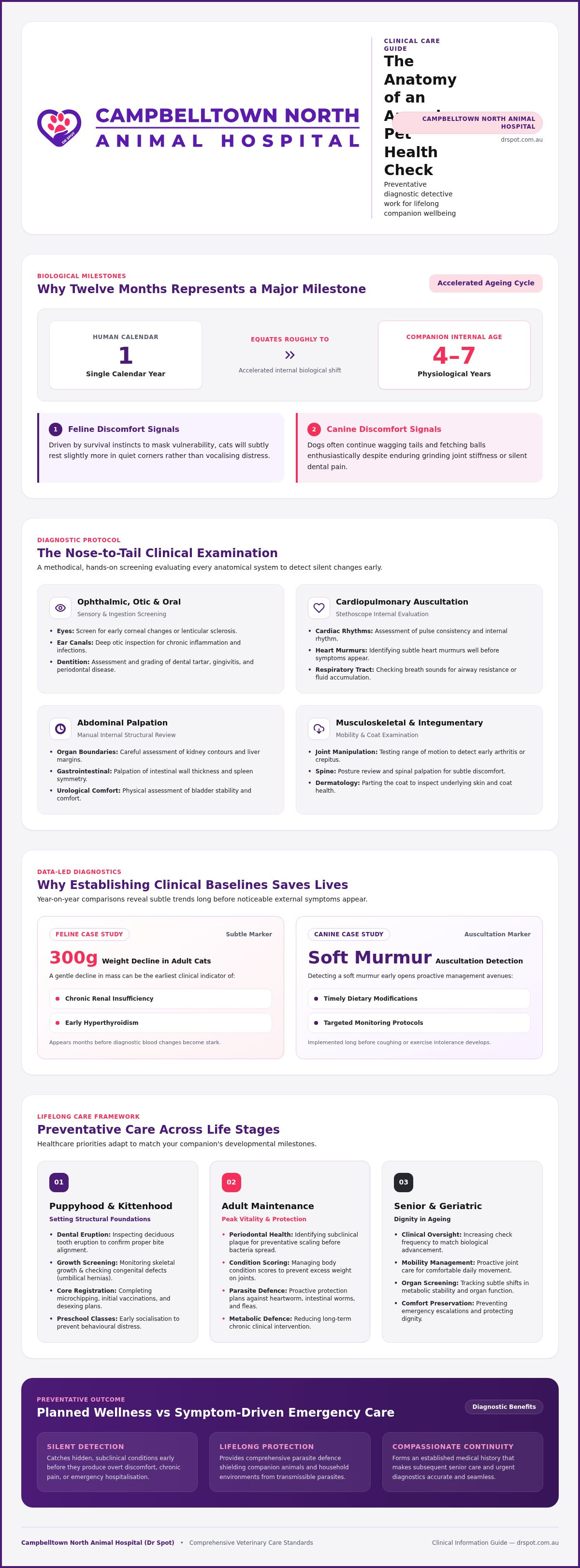
An annual pet health check is a thorough clinical assessment designed to evaluate internal organ systems, physical comfort, and metabolic stability. Dogs and cats experience biological ageing at an accelerated pace compared to humans; a single calendar year can represent four to seven physiological years for your companion. Because of this compressed lifespan, minor internal shifts can develop into advanced clinical issues surprisingly quickly.
Our companions also retain deeply ingrained survival instincts that drive them to mask chronic discomfort. Cats may simply rest slightly more in quiet corners, while dogs often continue wagging their tails and fetching balls despite grinding joint stiffness or dental pain. Booking a routine physical evaluation ensures that quiet physiological changes are identified and managed before they disrupt daily vitality.
Foundational principles of preventive medicine for dogs and cats demonstrate that proactive wellness examinations significantly reduce long-term medical interventions while supporting comfortable longevity.
The Nose-to-Tail Physical Examination Explained
A comprehensive examination is a methodical, hands-on screening of every anatomical system. During the consultation, your veterinarian gently inspects each area to build an accurate picture of overall wellness:
Ophthalmic, Otic, and Oral Inspection
Checking the eyes for early corneal changes or lenticular sclerosis, examining deep ear canals for chronic inflammation, and grading dental tartar, gingivitis, and periodontal disease.
Cardiopulmonary Auscultation
Listening through a stethoscope to assess cardiac rhythms, identify subtle murmurs, and evaluate breath sounds for fluid accumulation or airway resistance.
Abdominal Palpation
Feeling the internal structures to assess kidney contours, liver boundaries, intestinal thickness, bladder comfort, and spleen symmetry.
Musculoskeletal and Integumentary Review
Manipulating joints through complete ranges of motion to detect crepitus or early arthritis, evaluating spinal posture, and parting the coat to inspect dermatological health.
Why Clinical Baselines Save Lives
Establishing personalised clinical records allows your veterinary team to spot trends that numbers on a chart might otherwise hide. Subtle year-on-year variations provide vital early warnings:
A gentle 300-gram weight decline in an adult cat can be the earliest sign of chronic renal insufficiency or hyperthyroidism, appearing months before diagnostic blood changes become stark. Similarly, identifying a soft canine heart murmur allows for timely dietary modifications and targeted monitoring well before clinical coughing or exercise intolerance emerges. Documenting these physical baselines during an annual pet health check gives your veterinary partner the data required to intervene early, protecting your companion's quality of life for years to come.
Tailoring Preventative Care Across Your Pet’s Life Stages
Healthcare priorities naturally shift as your pet moves from playful beginnings to distinguished golden years. A tailored annual pet health check adapts to these evolving biological milestones, ensuring clinical assessments match the precise risks of your companion's developmental stage.
Puppyhood and Kittenhood: Setting Foundations
Early life consultations establish structural benchmarks and long-term protection. During these months, your veterinary team assesses deciduous tooth eruption to confirm bite alignment, monitors skeletal growth, and checks for congenital defects like umbilical hernias. It's also the ideal window to organise permanent microchip registration, complete initial vaccination courses, and plan a timely desexing procedure. Enrolling young dogs into structured puppy preschool classes during this period fosters vital socialisation skills and prevents behavioural distress as they mature.
Adult Maintenance: Peak Vitality and Weight Management
Once pets reach full physical maturity, wellness visits concentrate on protecting functional vitality. Subclinical periodontal disease represents one of the most common findings in adult dogs and cats. Identifying plaque build-up early allows for preventative dental scaling before oral bacteria enter the bloodstream to challenge internal organs.
Your clinician will also assess body condition scores to prevent subtle weight gain that stresses joints and triggers metabolic issues. Regular reviews ensure continuous protection against regional threats like heartworm, intestinal worms, and fleas. Choosing proactive, veterinarian-led prevention shields both your companion and household from preventable parasitic risks.
Senior and Geriatric Care: Dignity in Ageing
Pets age with remarkable grace, but advancing years require closer clinical oversight. For mature companions, transitioning from an annual pet health check to bi-annual reviews helps detect progressive degenerative joint changes, sensory dulling, and subtle cognitive shifts before they disrupt comfort.
Senior physical evaluations often pair with routine blood panels and urinalysis to evaluate renal and hepatic function. Catching metabolic declines in their earliest phases enables targeted nutritional adjustments and medical therapies that maintain quality of life. If your companion is entering their mature years, booking a gentle consultation through Campbelltown North Animal Hospital ensures they receive the dedicated, compassionate monitoring necessary for comfortable ageing.
Routine Wellness Check vs Symptom-Driven Emergency Visits
Waiting until an animal shows obvious outward signs of distress often shifts medical care from gentle prevention to urgent intervention. Chronic illnesses rarely begin with dramatic clinical signs; they simmer quietly beneath the surface. Scheduling a routine annual pet health check allows your veterinary team to identify underlying physiological imbalances in a calm, low-stress setting, sparing your family the emotional panic of sudden crisis care.
The Hidden Risks of "Wait and See" Approaches
Companion animals possess an instinct to soldier on despite feeling unwell. Adopting a wait-and-see mindset often allows manageable issues to cause irreversible structural harm:
Subgingival Dental Pathology
Bacteria accumulating below the gumline silently destroy the underlying alveolar bone and tooth roots long before a pet ever refuses food.
Silent Renal Compromise
Feline and canine kidneys have remarkable reserve capacity, meaning significant nephron function can be lost before increased thirst or urination becomes apparent at home.
Accelerated Cartilage Damage
A mild hitch in your dog's stride is rarely just fatigue. Left unaddressed, abnormal joint mechanics accelerate permanent arthritic erosion.
Addressing these concerns early prevents the sudden systemic crashes that require intensive hospitalisation and complex critical care.
Diagnostic Testing Before Major Clinical Procedures
Proactive wellness care also safeguards your companion during routine treatments. If your vet recommends dental cleaning or minor soft-tissue surgery, comprehensive diagnostics provide essential clinical insight. Running preanaesthetic blood tests evaluates kidney and liver function prior to administering general anaesthesia.
These simple pathology screens confirm whether internal organs can metabolise and eliminate anaesthetic agents safely. Objective blood values eliminate clinical assumptions, allowing your veterinary team to customise fluid therapy, modify drug choices, and ensure smooth post-operative recoveries. Embracing an annual pet health check establishes a dependable rhythm of preventative oversight, keeping your companion comfortable and protected year after year.
How Guardians Can Prepare for an Annual Vet Check
Your daily observations provide the foundation for an exceptional veterinary visit. While clinical diagnostics reveal internal health metrics, you witness how your companion actually lives, moves, and behaves each day. Arriving prepared helps your vet focus directly on subtle lifestyle shifts that might otherwise slip past unnoticed during an annual pet health check.
Documenting Home Habits and Subtleties
Adrenaline in the clinic often masks mild pain or stiffness. Bringing concrete examples of your companion's home routine bridges this diagnostic gap:
Daily Habits and Consumption
Track any gradual increases in water intake, shifts in food preference, or alterations in litter box frequency and stool consistency.
Smartphone Video Logs
Record short clips if you notice coughing fits, intermittent limping after naps, or restless pacing at night. Showing these behaviours directly eliminates vague guesswork.
Dietary and Prevention Inventories
Jot down specific food brands, exact portion sizes, daily treats, and the active ingredients in your current parasite prevention products.
Minimising Transit and Waiting Room Anxiety
A relaxed companion allows for a far more thorough and comfortable physical assessment. Reducing travel stress begins long before you load up the car:
For cats, place transport carriers in your living area days beforehand with familiar bedding and soothing synthetic pheromones. This transforms the carrier into a safe refuge rather than a dreaded signal of travel. For dogs, take a short, unhurried decompression sniff around the clinic surrounds before stepping through reception. Keeping them securely leashed prevents sudden interactions with other patients.
Pack favourite high-value rewards, such as roast chicken or soft treats, to offer positive reinforcement throughout the physical examination. If your companion is due for their routine review, book your annual pet health check online to secure a dedicated, gentle consultation tailored to their comfort.
Choosing a Trusted Veterinary Partner for Lifelong Pet Care
Finding the right clinical team transforms routine veterinary medicine into an enduring, supportive partnership. Just like a trusted family doctor, a compassionate veterinary hospital becomes familiar with your companion's unique personality, medical history, and daily quirks over time. Prioritising continuity of care builds profound trust. When your dog or cat recognises familiar faces and gentle hands, each annual pet health check feels like a reassuring visit rather than an overwhelming disruption.
Key Attributes of Exceptional Companion Care
Selecting a clinical home for your companion requires evaluating both technical capability and bedside manner. Look for practices with decades of clinical experience where practitioners take the time to listen, explain diagnostic findings clearly, and treat animal wellbeing as a heartfelt mission. Exceptional hospitals integrate gentle, fear-free handling principles that respect animal body language, consciously easing stress for anxious patients.
Diagnostic depth under one roof makes an enormous difference to patient safety. Fully equipped surgical suites, digital radiography, modern dental facilities, and on-site laboratory analysers ensure prompt answers when subtle issues arise. This cohesive infrastructure means your companion receives continuous care without the stress of being transferred between unfamiliar facilities.
Holistic Support Beyond the Consultation Table
Comprehensive companion healthcare extends well past the physical examination room. A dedicated animal hospital supports families through every chapter of guardianship with integrated auxiliary services:
Puppy Preschool
Structured early learning environments teach foundational social manners, positive environmental exposure, and bite inhibition to prepare young dogs for confident adult lives.
Dedicated Cat Boarding
Quiet, purpose-built feline boarding spaces provide peaceful lodging separated from canine wards, giving families genuine peace of mind while away.
Adoption and Ongoing Care
Compassionate kitten adoption initiatives and dedicated post-adoption guidance ensure young pets find safe, thriving domestic routines.
Investing in ongoing preventative oversight provides your four-legged family member with the best foundation for active, comfortable longevity. Schedule your companion’s thorough wellness review with Campbelltown North Animal Hospital (Dr Spot) to experience dedicated, unhurried clinical attention.
Prioritise Your Companion's Lifelong Vitality Today
Proactive care is the kindest gift you can offer your four-legged family member throughout their life. Rather than waiting for subtle discomfort to disrupt everyday joy, a thorough annual pet health check establishes essential biological baselines and catches silent conditions before they advance. Taking this proactive step protects your companion's everyday vitality, sparing your household the emotional strain of sudden medical crises. You don't have to navigate these healthcare decisions alone.
Backed by over 30 years of gentle, independent veterinary clinical experience, our dedicated team brings comprehensive diagnostic, surgical, and dental capabilities together under one roof. Along with tailored puppy preschool classes and quiet, dedicated cat boarding facilities, we remain devoted to supporting your companion across every developmental milestone. Book your companion’s comprehensive annual health check with our caring veterinary team today, and give yourself complete peace of mind for your pet's bright, healthy future.
Frequently Asked Questions
How often should I take my dog or cat to the vet for a routine check-up?
Adult dogs and cats should visit their vet at least once every twelve months for a thorough wellness check. Once companion animals enter their senior years, around seven or eight years of age, bi-annual reviews every six months are strongly recommended. Puppies and kittens need more frequent consultations during their first six months to monitor developmental milestones, coordinate desexing schedules, and complete initial immunisation courses safely.
What is the difference between an annual vaccination appointment and a health check?
A vaccination appointment administers specific protective antigens, whereas an annual pet health check involves a comprehensive, head-to-tail diagnostic examination. A vet will never administer a vaccination without first assessing the patient's heart, lungs, eyes, abdomen, and temperature. The physical examination confirms your companion is completely healthy and immunologically capable of processing the vaccine, turning an injection into a vital total-body wellness review.
Will my pet receive vaccinations during their annual wellness examination?
Yes, if booster immunisations are due, they are seamlessly administered during the wellness visit. Because modern vaccination protocols offer multi-year protection for certain core diseases, your veterinarian will review your companion's lifestyle and medical history to provide only the boosters they genuinely need. Combining both services into one calm appointment minimises clinic travel while keeping your pet's preventative protection completely current.
What should I do if my pet becomes highly anxious during veterinary clinic visits?
Notify clinic reception in advance so the team can prepare a quiet consult room before your arrival. For anxious felines, cover their travel carrier with a towel sprayed with calming synthetic pheromones. For dogs, waiting in the quiet comfort of your car rather than a busy reception area reduces sensory overload. Gentle handling techniques and high-value treats also help reshape clinic visits into positive, cooperative experiences.
Are preanaesthetic blood tests necessary before routine dental or desexing procedures?
Preanaesthetic blood tests provide crucial safety margins before any elective surgical procedure or dental cleaning. Even outwardly healthy young pets can harbour unseen congenital enzyme anomalies or mild organ imbalances that affect how they process anaesthetic drugs. Evaluating kidney and liver profiles beforehand allows your veterinary team to tailor anaesthetic medications, adjust intravenous fluid support, and ensure a smooth, secure recovery for your companion.
How do vets detect internal pain or arthritis in older dogs and cats?
Vets identify subtle pain through methodical musculoskeletal palpation, joint flexion, and observing natural gait patterns. Cats and dogs rarely cry out in pain; instead, clinicians detect arthritis through mild spinal muscle tension, reduced joint extension, or subtle limb muscle wasting. Your clinician also correlates physical findings with your home observations, such as hesitating before jumping onto furniture or slowing down during morning walks.
Does an annual health check include parasite screening for heartworm and intestinal worms?
An annual pet health check always includes a comprehensive review of your companion's parasite protection protocols. Your vet inspects the skin for flea dirt, checks stool characteristics, and discusses routine diagnostic blood testing for heartworm disease. Because Australian climates foster parasites year-round, your clinician will verify that your current preventative routine provides continuous, overlapping defence against intestinal worms, fleas, ticks, and deadly heartworm.
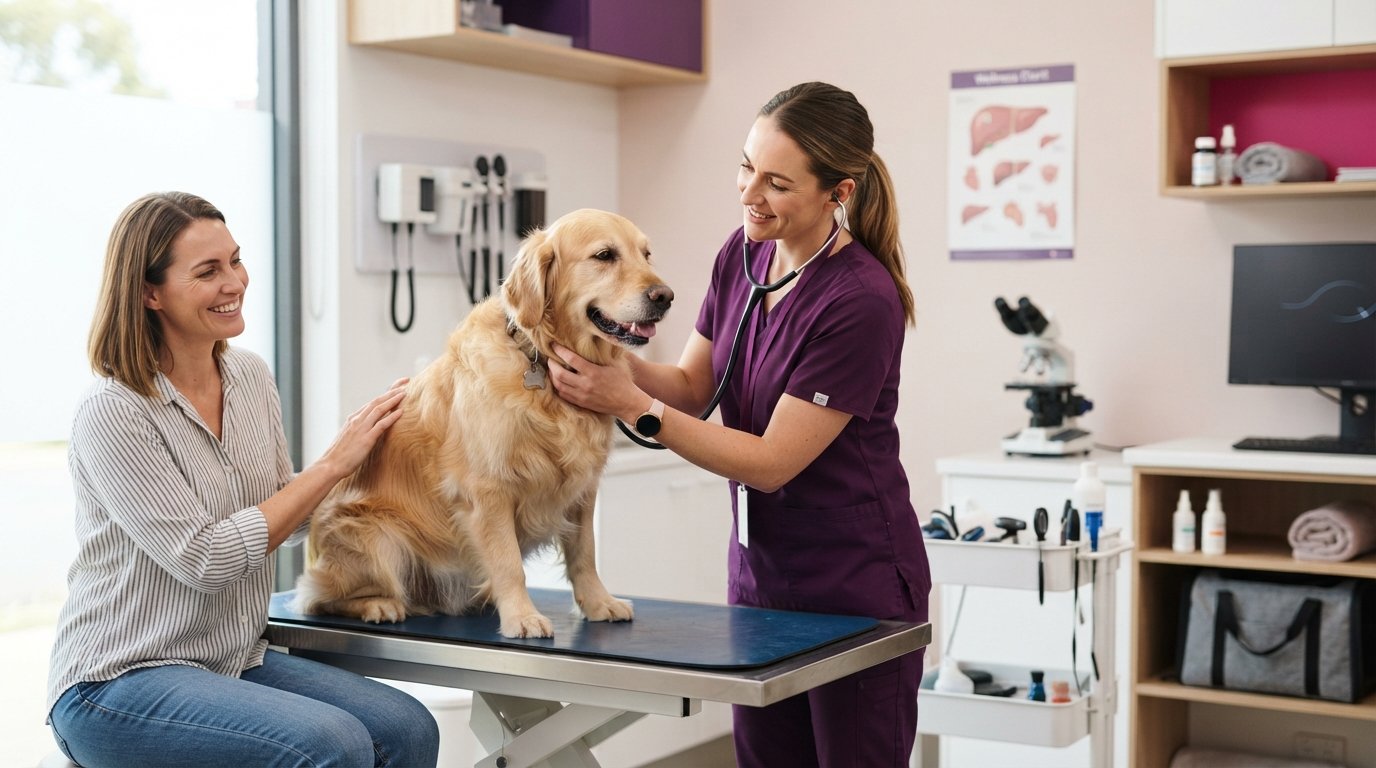
Book an annual pet health check to protect your companion. Discover our 2026 Australian guide to preventative vet care, routine exams, and early detection.
Frequently Asked Questions About Desexing Pets

.svg)
.svg)


Dr. Spot (Campbelltown North Animal Hospital) © Copyright All Rights Reserved 2023